Sacred Ayurvedic Rituals
"दिनचर्यां समाचरेत्" — Aligning the biological clock with nature’s cyclical rhythms. (Ashtanga Hridaya)
Time-honored self-care rituals formulated to harmonize mind, body, and cellular radiance. Step-by-step classical methods for living botanicals.
The Royal Ubtan Purification (Tejo-Vardhini)
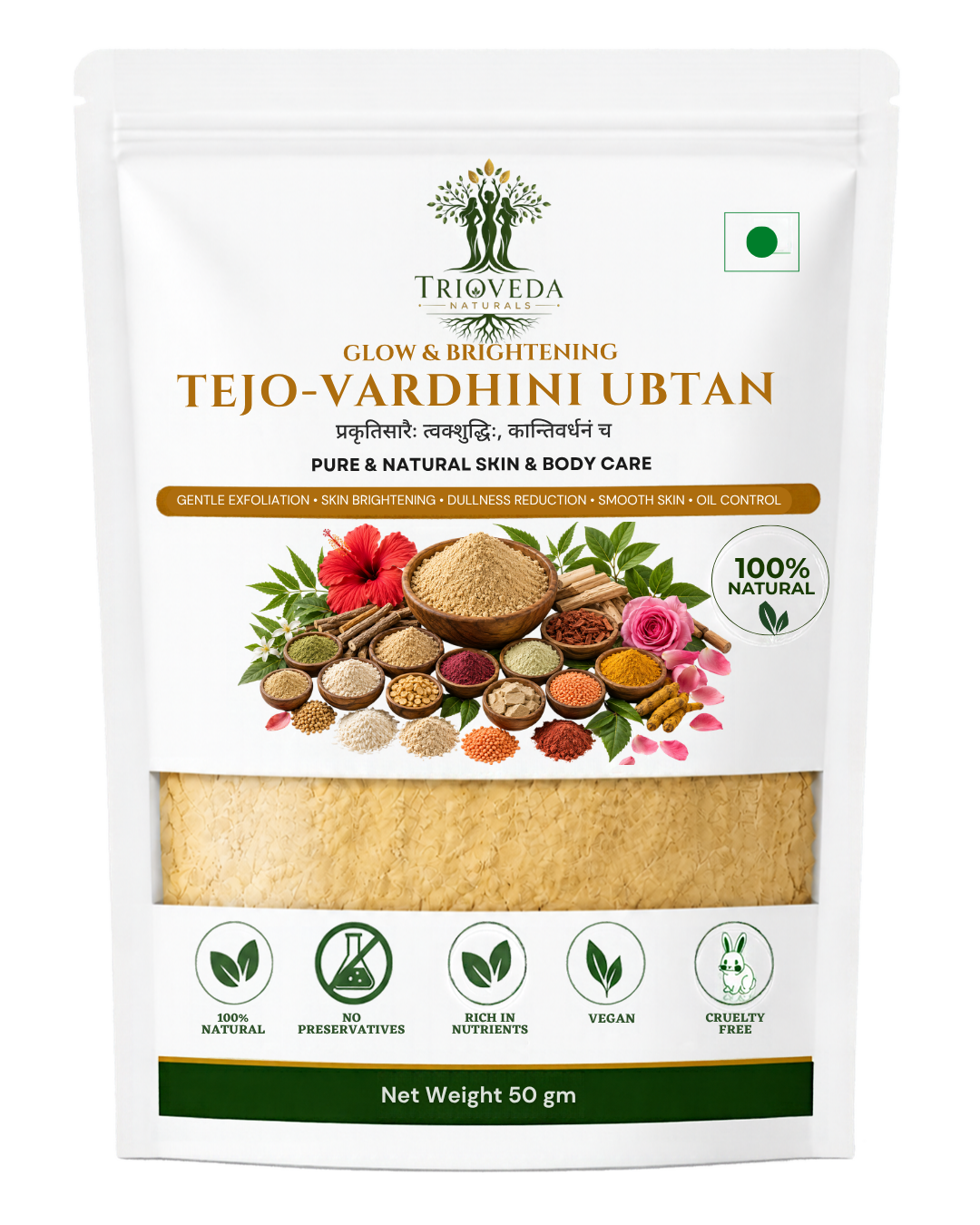
Take 2 teaspoons of Tejo-Vardhini Ubtan. Blend with chilled pure rose water for Pitta (sensitive/inflamed) skin, raw milk or almond oil for Vata (dry) skin, or fresh aloe vera gel/curd for Kapha (oily) skin.
- Apply the rich paste evenly across face, neck, and décolletage in gentle upward strokes.
- Rest quietly for 10-12 minutes while the active herbal enzymes draw out cellular toxins.
- Spritz lukewarm water and gently roll off with your palms in circular polishing motions.
Hibiscus Nectar Scalp & Follicle Rejuvenation
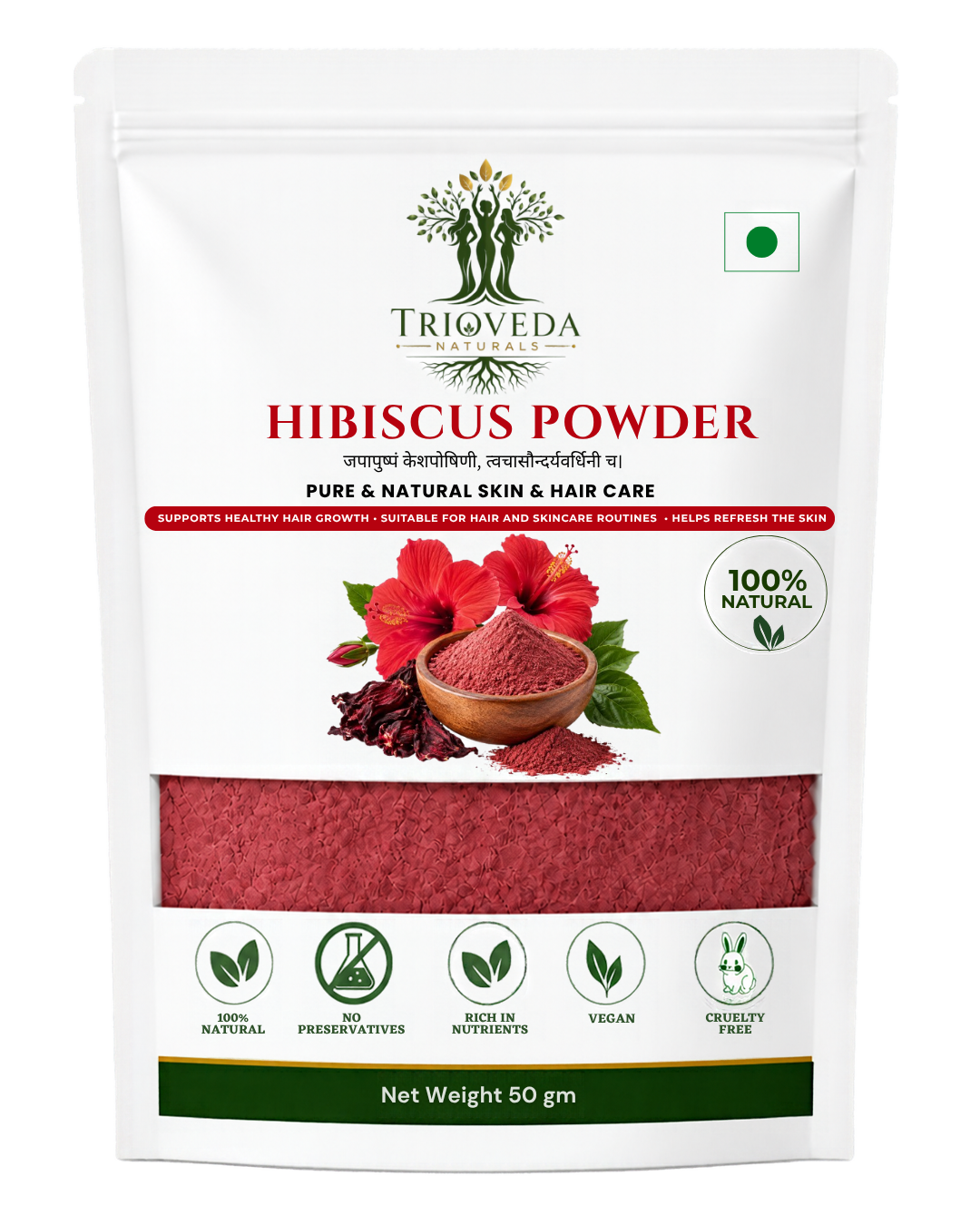
In a wooden or earthen bowl, combine 3 tablespoons of pure shade-dried Hibiscus Powder with 2 tablespoons of warm coconut oil and 1 tablespoon of fresh aloe vera gel.
- Section damp hair and massage the crimson paste directly into scalp roots and hair strands.
- Wrap hair in a warm cotton towel or bonnet for 30 minutes to facilitate anthocyanin absorption.
- Rinse thoroughly with tepid water for lustrous shine, follicle strength, and dandruff defense.
Soap-Free Evening Botanical Cleansing Wash
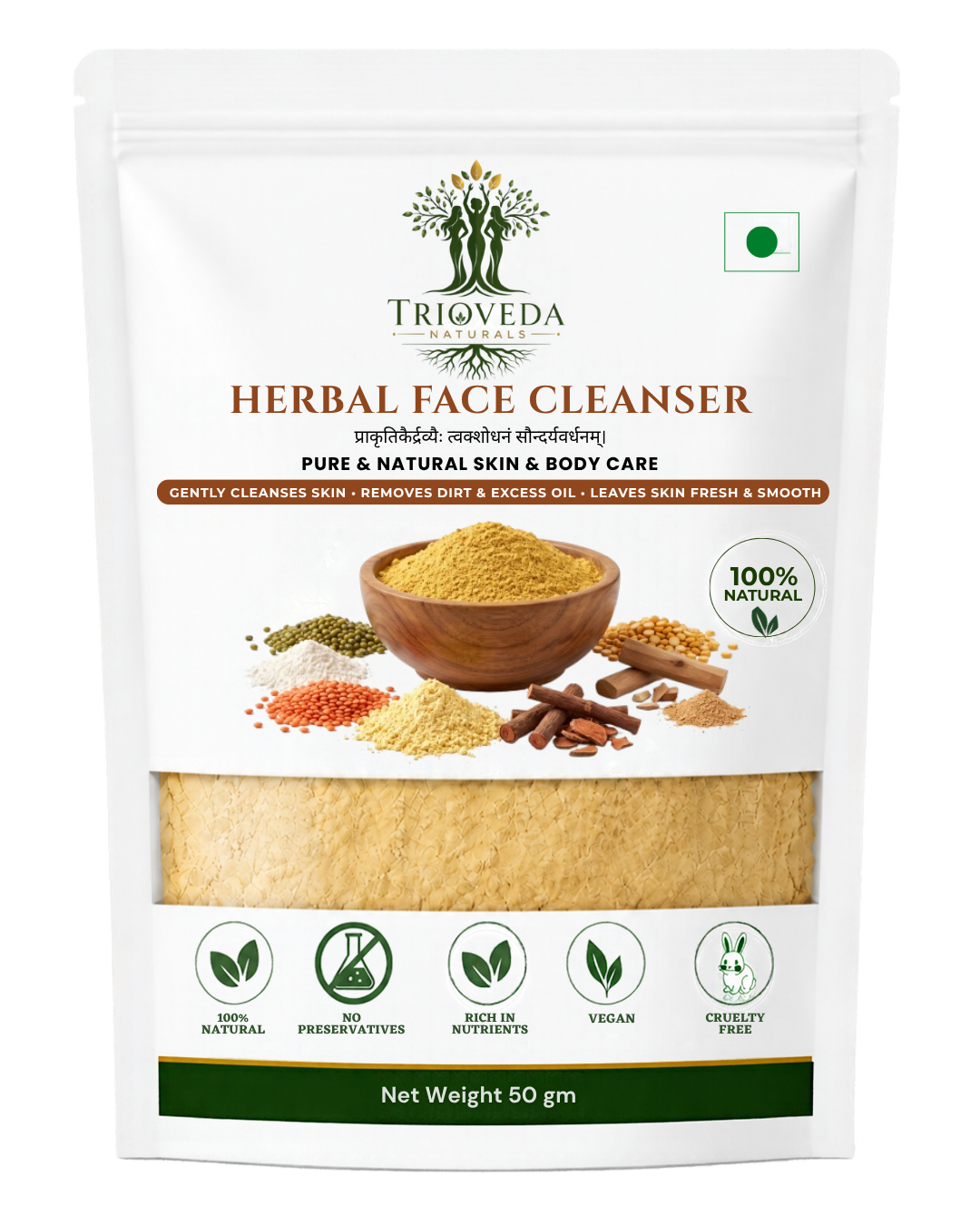
Take 1 level teaspoon of Herbal Cleanser in damp palms. Add a few drops of water to create a soft, non-foaming cleansing cream.
- Massage gently over face for 60 seconds to lift urban pollution, excess sebum, and makeup.
- Rinse with cool water to seal natural hydration without disrupting the delicate acid mantle.
- Pat dry with a clean cotton cloth and follow with a spritz of rose hydrosol.
Ayurvedic Daily Rituals & Dinacharya FAQs
Authoritative answers detailing application methods, timing, dosha customization, and visible benefits.
Dinacharya is the ancient Vedic practice of aligning daily activities with the solar and biological cycles. Performing morning ubtan cleansing and evening herbal purification clears metabolic waste (Ama), improves lymphatic circulation, balances natural sebum, and stimulates cellular regeneration without caustic chemical stripping.
For normal, oily, or congested skin, ubtan rituals can be performed 3 to 4 times a week or as a gentle daily morning cleanser. For dry, mature, or highly reactive Pitta skin, practicing the ritual 2 to 3 times weekly blended with cooling mixers (milk or rose hydrosol) delivers optimal cellular glow.
Yes. Ayurveda strongly recommends adapting ritual mixers according to season: during scorching summer months (Grishma), mix with chilled rose hydrosol and vetiver water; during monsoon (Varsha), blend with honey and aloe; and during crisp winter months (Shishira), mix with warm whole milk or sweet almond oil for protective lipid replenishment.
Facial ubtans should remain on the skin for 10 to 12 minutes until semi-dry; do not allow the paste to become completely dry and cracked, as this can draw moisture out of the epidermis. Hair remedies (such as Hibiscus scalp packs) should remain for 25 to 35 minutes before rinsing with tepid water.
Immediate clarity, soft texture, and natural freshness are noticeable from the very first ritual. Because classical Ayurveda works at the deep cellular tissue level (Rasa and Rakta Dhatus), sustained transformation—such as balanced pigmentation, reduced fine lines, and increased skin resilience—manifests consistently within 3 to 4 weeks of regular Dinacharya practice.